
Introduction
Chainsaw Man, a creation of the brilliantly unconventional mind of Tatsuki Fujimoto, has carved out a unique niche in the manga landscape since its debut. Bursting onto the scene with its visceral action, darkly comedic undertones, and deeply philosophical questions, it quickly transcended typical shonen boundaries to become a cultural phenomenon. This series is not merely an action-packed devil hunt; it’s a profound exploration of humanity, desire, and the often-grim reality of existence, wrapped in an undeniably stylish and chaotic package.
Plot Summary
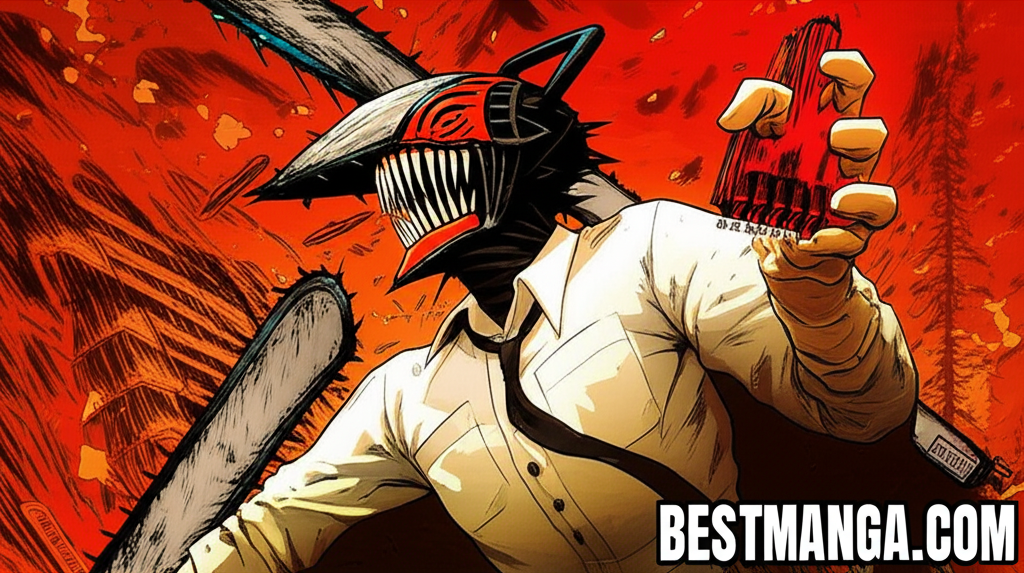
The narrative centers around Denji, a destitute young man burdened by his deceased father’s immense debt to the yakuza. His only companion is Pochita, a Chainsaw Devil dog with whom Denji forms a unique bond, using his powers to hunt other devils for meager pay. After a brutal betrayal leaves him for dead, Denji’s life takes an extraordinary turn. Pochita merges with him, turning Denji into the titular Chainsaw Man – a hybrid with the power to sprout chainsaws from his head and arms. Recruited by the enigmatic Makima into the Public Safety Devil Hunters, Denji is thrust into a world of intense combat against terrifying devils, all while grappling with his simple, yet deeply human, desires for a normal life, good food, and perhaps, a romantic connection.
Review
Storytelling
The storytelling in Chainsaw Man is nothing short of a rollercoaster ride, meticulously crafted by Fujimoto to constantly subvert expectations. The plot moves at a relentless pace, never allowing readers to get too comfortable before introducing another shocking twist or brutal revelation. What appears to be a straightforward demon-hunting narrative quickly evolves into a complex tapestry of government conspiracies, ancient prophecies, and the raw, often tragic, pursuit of basic human happiness. The series excels at balancing its high-octane action with moments of profound emotional depth and laugh-out-loud dark comedy. Themes of loneliness, purpose, love, and the cost of power are explored with a maturity and bluntness rarely seen in mainstream shonen. Fujimoto’s narrative prowess ensures that every arc feels fresh and unpredictable, keeping readers on the edge of their seats from the first chapter to the last.
Characters
Fujimoto’s characters are arguably the strongest aspect of Chainsaw Man. Denji, the protagonist, is far from a typical heroic figure. His desires are simple, almost primal, making him incredibly relatable despite his extraordinary circumstances. His journey is one of self-discovery, both painful and humorous. Accompanying him are a cast of equally memorable and deeply flawed individuals: Power, the chaotic Blood Devil whose unpredictable nature provides much of the series’ comedic relief and surprising emotional beats; Aki Hayakawa, the stoic and tragic devil hunter driven by a thirst for revenge; and the enigmatic Makima, whose alluring charm hides a terrifying and manipulative intelligence that serves as the central mystery of the first part. The relationships between these characters, often dysfunctional and complex, are the heart of the series, providing crucial emotional anchors amidst the relentless violence and despair.
Artwork
The artwork of Chainsaw Man is distinctively Fujimoto: raw, kinetic, and utterly impactful. While some panels might appear rough around the edges compared to more polished manga, this style perfectly complements the series’ gritty and brutal tone. Action sequences are incredibly dynamic, conveying a sense of speed and visceral impact that makes every clash feel genuinely devastating. Fujimoto’s paneling is masterfully used to control pacing, delivering explosive moments and intimate character beats with equal effectiveness. Character designs are unique and memorable, from the monstrous forms of various devils to the expressive faces of the human cast. The horror elements are genuinely disturbing, with creature designs that are both grotesque and imaginative. The art is an integral part of the storytelling, amplifying the emotional highs and lows, and cementing Chainsaw Man‘s visual identity as one of the most striking in recent memory.
Conclusion
Chainsaw Man stands as a towering achievement in modern manga, a testament to Tatsuki Fujimoto’s fearless creativity. It’s a series that defies easy categorization, blending elements of dark fantasy, horror, action, and black comedy into a cohesive, unforgettable experience. With its unpredictable narrative, deeply human characters, and distinctive art style, it offers a fresh and exhilarating take on the shonen genre, while simultaneously appealing to readers seeking something much deeper and more unconventional. For anyone looking for a manga that challenges expectations, delivers relentless excitement, and delves into profound emotional depths, Chainsaw Man is an absolute must-read. It’s a modern classic that demands to be experienced.