
Introduction
Boruto: Two Blue Vortex emerges as the highly anticipated continuation of the Boruto saga, following a pivotal three-year timeskip that has reshaped the entire ninja world. This latest installment picks up the threads from Boruto: Naruto Next Generations, plunging readers into a darker, more complex narrative where the protagonist is no longer the celebrated hero but an ostracized fugitive. For fans of Masashi Kishimoto’s iconic Naruto universe, Two Blue Vortex represents a bold new chapter, promising high stakes, intense character development, and a fresh direction that seeks to define its own legacy while honoring its predecessors. This review delves into the intricate layers of its plot, the evolution of its characters, and the distinctive art style that brings this compelling narrative to life.
Plot Summary
The story of Boruto: Two Blue Vortex begins three years after the cataclysmic events caused by Eida’s Omnipotence, a powerful Shinjutsu that altered the memories of nearly everyone on Earth. Boruto Uzumaki, once the son of the Seventh Hokage, is now branded as the murderer of Naruto and Hinata and is considered a traitor to Konoha. Kawaki, the adopted son who replaced Boruto in everyone’s memories, is revered as the village’s protector. During this period, Boruto has been training rigorously under Sasuke Uchiha, honing his skills and preparing for the inevitable confrontation with Code and the escalating threats posed by the Otsutsuki. The narrative re-engages as Code launches a new assault on Konoha, forcing Boruto to return and reveal his enhanced powers. However, the conflict soon escalates with the mysterious emergence of the Shinju clones—sentient, powerful beings born from Code’s Ten-Tails, possessing the will and memories of those they consumed, including Jura, who holds a haunting resemblance to Kurama. These new antagonists present an existential threat, not only to Konoha but to the very fabric of chakra and life itself, setting the stage for a truly epic confrontation.
Review
Boruto: Two Blue Vortex makes a powerful statement from its opening chapters, immediately establishing a tone that is noticeably grittier and more mature than its predecessor. This sequel successfully capitalizes on the dramatic cliffhanger that concluded Naruto Next Generations, offering a narrative that feels both earned and urgent.
Plot
The plot of Two Blue Vortex is a masterclass in raising the stakes. The reversal of fortunes for Boruto and Kawaki creates an inherently compelling dynamic, forcing readers to grapple with themes of identity, sacrifice, and the perception of truth. The timeskip itself is handled with precision, allowing for significant character growth and the introduction of new powers without feeling rushed. The emergence of the Shinju clones, particularly Jura, adds a terrifying new dimension to the antagonist roster. Their enigmatic motives and immense power elevate the threat level far beyond what even the Otsutsuki previously represented, shifting the focus from simply fighting alien invaders to confronting beings that challenge the very nature of existence and chakra itself. The pacing is tight, with each chapter unveiling critical developments or intense action sequences, ensuring that the story never loses its momentum. The unraveling mystery of the Shinju, coupled with the persistent threat of Code and the looming specter of the Otsutsuki, promises a rich and unpredictable narrative journey.
Characters
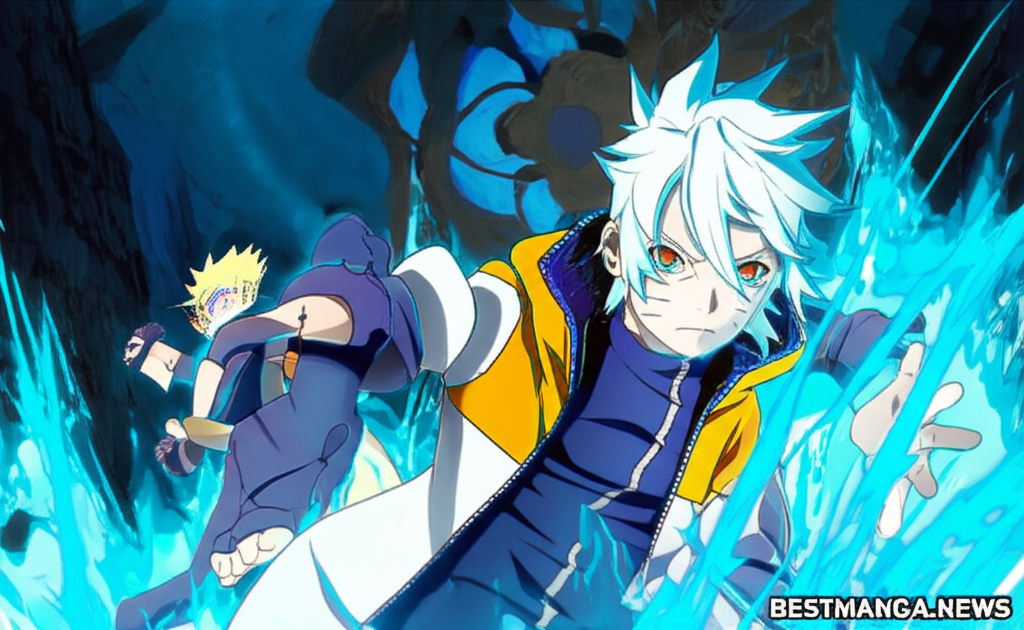
The character development in Two Blue Vortex is arguably its strongest suit. Boruto Uzumaki has undergone a profound transformation. Gone is the impulsive, mischievous boy; in his place stands a stoic, self-assured, and incredibly powerful young man burdened by the weight of the world. His new abilities, particularly Rasengan Uzuhiko, demonstrate a creative evolution of his fighting style, reflecting his growth and mastery. His maturity and strategic thinking make him a compelling protagonist.
Kawaki continues to be a complex anti-hero, driven by an unshakeable resolve to protect Naruto, even at the cost of the world’s perception of Boruto. His internal conflict and unwavering conviction provide a powerful foil to Boruto, making their inevitable clash all the more tragic.
Sarada Uchiha shines as a beacon of hope and determination. Her unwavering belief in Boruto, coupled with the awakening of her Mangekyo Sharingan, solidifies her as a crucial figure in the unfolding drama. Her intellect and emotional strength are vital to the resistance against Eida’s Omnipotence.
The new generation of Konoha ninjas also shows signs of development, adapting to the harsh new reality. The villains, particularly the Shinju clones like Jura and Hidari, are menacing and intelligent, adding layers of psychological and physical threat.
Artwork
Ikemoto’s artwork in Boruto: Two Blue Vortex continues to evolve, establishing its unique visual identity distinct from Kishimoto’s original style while retaining the series’ recognizable essence. The timeskip has allowed for more refined and mature character designs, particularly for Boruto and Sarada, who now exude a greater sense of power and gravitas. The action sequences are dynamic and fluid, conveying a strong sense of speed and impact. Ikemoto’s paneling effectively builds suspense and delivers explosive climaxes. The depiction of the new abilities, such as Boruto’s Rasengan Uzuhiko, is visually striking and imaginative. The Shinju clones are rendered with an eerie, powerful presence, making them visually distinct and intimidating antagonists. While some aspects of the art might still draw comparison to its predecessor, Two Blue Vortex showcases Ikemoto’s improving command over the series’ aesthetic, delivering detailed environments and expressive character work that enhance the darker tone of the story.
Conclusion
Boruto: Two Blue Vortex is a powerful and gripping continuation that successfully elevates the stakes and injects a much-needed sense of urgency into the Boruto narrative. With its mature themes, compelling character development, and a meticulously crafted plot, it stands as a testament to the enduring appeal of the Naruto universe. The series bravely delves into darker territory, forcing its characters and readers alike to confront harsh realities and challenging moral dilemmas. While still unfolding, Two Blue Vortex has laid a strong foundation for an epic saga, proving that the legacy of the Hidden Leaf Village is in capable hands, and that Boruto’s journey promises to be as tumultuous and captivating as his father’s. For both long-time fans and those looking for a fresh, high-stakes shonen experience, Two Blue Vortex comes highly recommended.